Brand Tracking Study. Know whether your brand is growing, stalling, or eroding, month over month.
Run recurring brand health studies with a consistent methodology. Awareness funnel, perception ratings, and competitive position tracked over time — with real consumers from 127 countries. From $0.73/response.
Brand tracking is the only way to know whether your brand investment is working over time. A single brand study tells you where you stand today. A brand tracking program — the same methodology, run quarterly or monthly — tells you whether you're moving.
Five things a brand tracking study measures:
Unaided awareness
How many people in your category can name your brand without prompting? This is your hardest and most valuable awareness metric. It moves slowly — which is why you need to track it.
Aided awareness
When shown your brand name, what percentage of the category recognizes it? This is your recognition floor — the minimum level of market familiarity you've built.
Brand favorability
Of those who know your brand, how many view it favorably? This is where campaigns and product experience show up in the data. number to measure: the difference between "I'd probably use that" and "I'd actually pay for it." An appeal score without a purchase intent score is an expensive way to feel good about an idea that won't convert.
Competitive position
Where do you rank in awareness and favorability relative to named competitors? Tracking this quarterly shows whether you're gaining or losing ground.
Purchase intent
What percentage of your target market would consider purchasing in the next 3 months? This is the leading indicator for revenue that brand tracking uniquely captures.
How it works


Set your audience.
Target category buyers — people who've purchased in your product category in the last 6 months. Add demographic filters for age, gender, location, and more. This is your consistent panel for all future waves.

Launch the study.
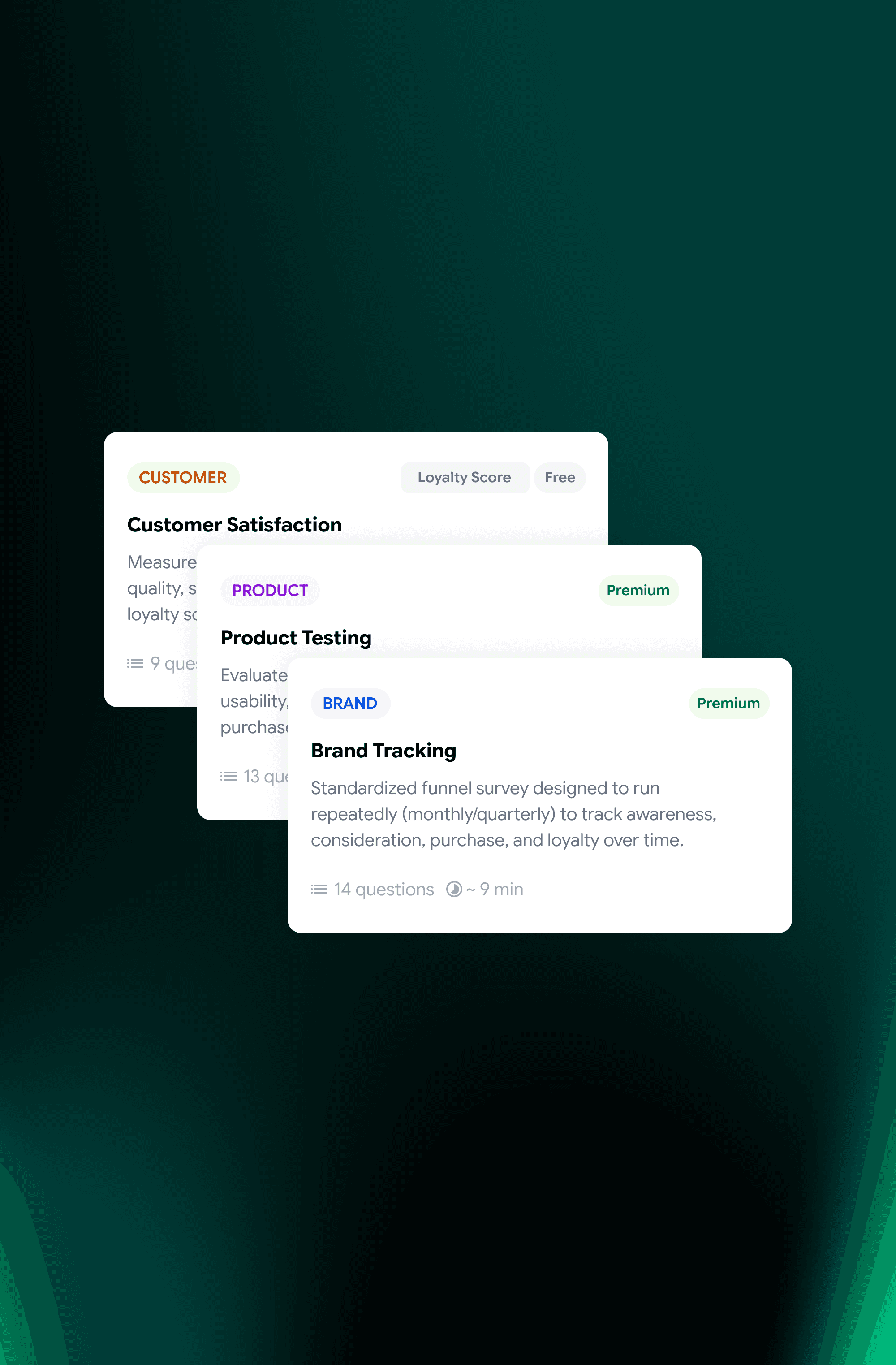
Use the Brand Tracking template — an awareness funnel built to run repeatedly. The question structure, answer options, and competitor set stay consistent across waves so you can measure change, not noise.
Collect responses.
The panel delivers responses from 30M+ verified respondents. Cost is confirmed before you launch. Quality controls — device fingerprinting, speeding detection, attention checks — run automatically.
Read your results.
Per-question analytics show current wave results. Run the study again next quarter and track each metric over time: awareness trend, favorability trend, competitive share of mind. Export raw data as CSV or XLSX for deeper analysis.
Why consistency is everything in brand tracking: if you change the question wording, the competitor set, or the audience definition between waves, you can't tell whether the numbers changed because of real brand movement or because of your methodology. The template locks in your baseline. Don't change it.
A standard brand tracking wave with 500 respondents in a broad B2C category runs $365–$500 in panel costs, depending on targeting. Most teams run 300–500 respondents per wave — enough for statistically reliable results at 95% confidence.
Launch your brand tracking study → [Start free — no credit card required]

Simple pricing. No surprise invoices.



Common questions
What is brand tracking?
Brand tracking is the practice of running the same brand health study — awareness, favorability, associations, purchase intent — at regular intervals (monthly, quarterly, or annually) to measure how your brand is changing over time. A single study gives you a snapshot. Brand tracking gives you trend data: are you growing, stalling, or eroding? It's the methodology that separates brands that manage brand health from those that guess at it.
How often should I run a brand tracking study?
Quarterly is the standard for most brands — frequent enough to detect meaningful change, infrequent enough that real movement has time to happen between waves. Monthly tracking makes sense if you're running heavy advertising or going through a major brand change and want to see movement faster. Annual tracking is too slow to be actionable — by the time you see a problem in the data, you're already 12 months in.
How many respondents do I need per wave?
300–500 respondents per wave is the standard for a B2C brand in a broad category. At 500, you're at 95% confidence with a ±4.4% margin of error — tight enough to detect a 5–8 point awareness shift between waves. If you're tracking in a niche category or a specific demographic, you may need fewer. Use our sample size calculator → to get the exact number.
What's the difference between brand tracking and brand awareness?
Brand awareness is a single measurement — what percentage of people know your brand right now. Brand tracking is the practice of measuring awareness (and other brand metrics) repeatedly over time to detect movement. Brand tracking includes awareness as one of several metrics it follows across waves.
What's the difference between brand tracking software and running a brand tracking study?
Brand tracking software typically refers to platforms that monitor brand mentions, sentiment, and social data passively — they track what people say about your brand online. A brand tracking study is active primary research: you survey real consumers in your target market directly, asking about awareness, favorability, and intent. Both are useful. Social listening tells you volume and sentiment. Survey-based brand tracking tells you what your market actually thinks — including the large portion of your target audience who never mentions your brand online.
Can I run brand tracking across multiple countries?
Yes. SegmentOS has respondents in 127 countries. You can run the same study in multiple markets simultaneously and compare results across geographies. For multi-market brand tracking, the methodology stays identical — only the audience geography changes — so you can compare awareness and favorability across markets directly.