Brand Awareness Survey. Know exactly where your brand stands in your market.

A research-grade brand awareness study measuring unaided recall, aided recognition, brand associations, and purchase intent — with a category buyer screener and the correct question sequence built in. Launch in under 2 minutes.

30M+ panel · 127 countries · From $0.73/response

30M+ panel · 127 countries · From $0.73/response

What a brand awareness survey measures

What a brand awareness survey measures

What a brand awareness survey measures

Unaided recall

Can consumers name your brand without any prompting? Ask them to list brands in your category and see whether yours appears — and where it appears in the list. The first mention is top-of-mind awareness, the strongest form of brand salience.

Aided awareness

Show respondents your brand name alongside competitors. Measure how familiar they are with each — never heard of it, heard of it but never used, used it before, or use it regularly. Captures recognition for brands that aren't spontaneously recalled.

Brand associations

Which words, feelings, and qualities do consumers associate with your brand versus competitors? This reveals how your brand is positioned in consumers' minds, not just whether they recognize the name.

Purchase intent

Among people who know your brand, how likely are they to buy from you in the next three months? Connects awareness to commercial potential.

Why sequence matters

unaided recall must come before aided recognition in every brand awareness study. Showing respondents your brand name before asking what brands they know primes them and inflates unaided recall artificially. The template enforces the correct order automatically.

Who runs brand awareness surveys

Who runs brand awareness surveys

Who runs brand awareness surveys

Who runs brand awareness surveys

establishing a baseline before a campaign and measuring whether awareness improved afterward.

Brand managers

who want to know if their brand name registers with their target market before committing to signage, packaging, and out-of-home advertising.

Startup founders

benchmarking brand awareness against direct competitors — not in the abstract, but among the specific consumers who buy in the category.

Marketing teams

delivering brand health audits to clients who want numbers, not directional anecdotes from a focus group.

Agencies

How it works

BG

Set your audience.

Target category buyers — people who've purchased in your product category in the last 3–6 months. Add demographic filters (age, gender, location) to match your target market. The screener routes out non-buyers automatically.

BG

Launch the study.

The Brand Awareness template has the correct unaided-to-aided sequence, brand association battery, and competitive grid pre-built. Customize the brand names and competitive set, set your sample size, and launch.
BG

Collect responses.

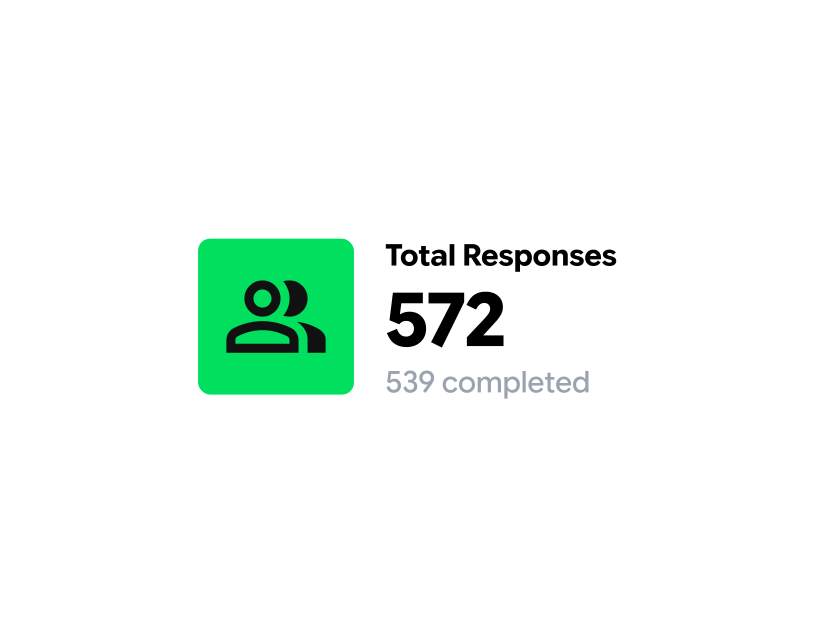
The panel delivers in as little as 48 hours. Cost is confirmed before you launch — enter your target sample size and see the total before committing.
BG

Read your results.

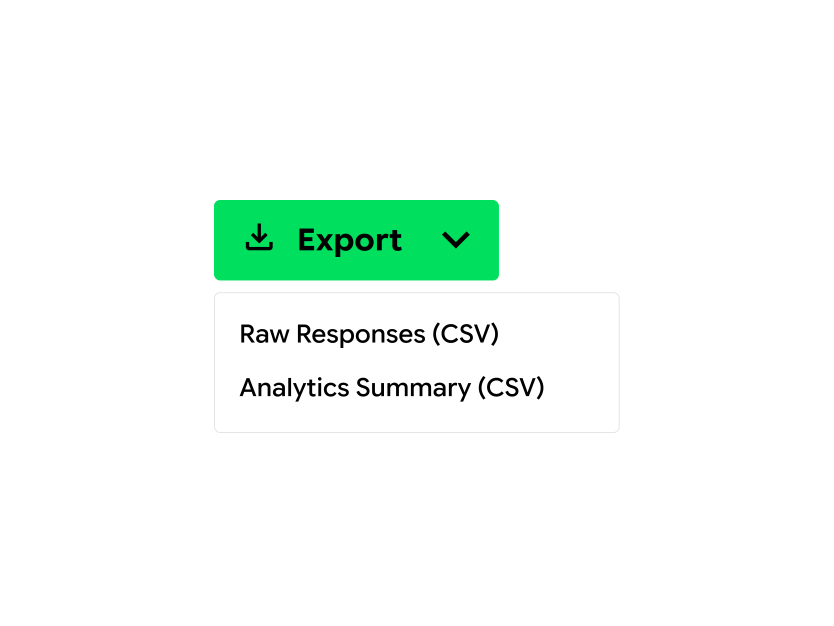
Unaided recall frequency, aided awareness breakdown by familiarity level, brand association heatmap by attribute, and purchase intent distribution. Export raw data as CSV or XLSX.

Launch your brand awareness survey → [Start free — no credit card required]

What's in the Brand Awareness template

The template covers ~12 questions:

Screener"Which of the following product categories have you purchased in the last 6 months?" Auto-disqualifies non-category buyers.

Unaided recall"Without looking at any logos or brand names, which [category] brands can you think of? List as many as you can." Open text. Captures spontaneous top-of-mind.

Aided awareness grid"How familiar are you with each of the following brands?" Your brand + up to 5 competitors. Scale: Never heard of it / Heard of it but never used / Used it before / Use it regularly.

Brand associations"Which of the following words would you use to describe [brand]?" Multiple choice, randomized, 15–20 attribute options.

Purchase intent"How likely are you to purchase from [brand] in the next 3 months?" 5-point scale.

Attention check — auto-disqualifies inattentive respondents before they reach your results.

Template available on Pro plan ($79/month). Free plan includes 4 templates.

Esteban Corrales, Chief Analytics Officer of SegmentOS.

What's in the Brand Awareness template

The template covers ~12 questions:

Screener"Which of the following product categories have you purchased in the last 6 months?" Auto-disqualifies non-category buyers.

Unaided recall"Without looking at any logos or brand names, which [category] brands can you think of? List as many as you can." Open text. Captures spontaneous top-of-mind.

Aided awareness grid"How familiar are you with each of the following brands?" Your brand + up to 5 competitors. Scale: Never heard of it / Heard of it but never used / Used it before / Use it regularly.

Brand associations"Which of the following words would you use to describe [brand]?" Multiple choice, randomized, 15–20 attribute options.

Purchase intent"How likely are you to purchase from [brand] in the next 3 months?" 5-point scale.

Attention check — auto-disqualifies inattentive respondents before they reach your results.

Template available on Pro plan ($79/month). Free plan includes 4 templates.

Esteban Corrales, Chief Analytics Officer of SegmentOS.

What's in the Brand Awareness template

The template covers ~12 questions:

Screener"Which of the following product categories have you purchased in the last 6 months?" Auto-disqualifies non-category buyers.

Unaided recall"Without looking at any logos or brand names, which [category] brands can you think of? List as many as you can." Open text. Captures spontaneous top-of-mind.

Aided awareness grid"How familiar are you with each of the following brands?" Your brand + up to 5 competitors. Scale: Never heard of it / Heard of it but never used / Used it before / Use it regularly.

Brand associations"Which of the following words would you use to describe [brand]?" Multiple choice, randomized, 15–20 attribute options.

Purchase intent"How likely are you to purchase from [brand] in the next 3 months?" 5-point scale.

Attention check — auto-disqualifies inattentive respondents before they reach your results.

Template available on Pro plan ($79/month). Free plan includes 4 templates.

Simple pricing. No surprise invoices.

One subscription. Survey builder, panel access, and research-grade methodology all included.

One subscription. Survey builder, panel access, and research-grade methodology all included.

Free

$0

5 surveys (lifetime)

500 responses/month

4 templates

Standard question types

Basic analytics

Restricted question library access

/month

$

29

Unlimited surveys

All 17 templates

All question types

Multi-language (27 languages)

Scoring & quotas

Remove branding

Full CSV/XLSX export

Full access to our question library

Pro

/month

$

79

Everything in Premium

Audience panel access

White-label

Priority support

Panel Responses from $0.73

B2C consumer responses from $0.73/response. B2B professional responses priced by targeting criteria. Exact cost shown before you launch — always.


No annual contract required. Cancel anytime.

Free

$0

5 surveys (lifetime)

500 responses/month

4 templates

Standard question types

Basic analytics

Restricted question library access

/month

$

29

Unlimited surveys

All 17 templates

All question types

Multi-language (27 languages)

Scoring & quotas

Remove branding

Full CSV/XLSX export

Full access to our question library

Pro

/month

$

79

Everything in Premium

Audience panel access

White-label

Priority support

Panel Responses from $0.73

B2C consumer responses from $0.73/response. B2B professional responses priced by targeting criteria. Exact cost shown before you launch — always.


No annual contract required. Cancel anytime.

Free

$0

5 surveys (lifetime)

500 responses/month

4 templates

Standard question types

Basic analytics

Restricted question library access

/month

$

29

Unlimited surveys

All 17 templates

All question types

Multi-language (27 languages)

Scoring & quotas

Remove branding

Full CSV/XLSX export

Full access to our question library

Pro

/month

$

79

Everything in Premium

Audience panel access

White-label

Priority support

Panel Responses from $0.73

B2C consumer responses from $0.73/response. B2B professional responses priced by targeting criteria. Exact cost shown before you launch — always.


No annual contract required. Cancel anytime.

Common questions

What's the difference between brand awareness and brand tracking?

A brand awareness survey is a one-time diagnostic — it tells you where your brand stands right now. Brand tracking runs the same study monthly or quarterly to measure whether awareness is improving over time. Run a brand awareness study first to establish your baseline, then set a tracking cadence to measure movement.

How many respondents do I need?

300–500 category buyers is the standard for a B2C brand awareness study. At 300, you're at 95% confidence with a ±5.7% margin of error — enough to make meaningful comparisons across brands. For niche categories, you may need fewer. Use the sample size calculator → to confirm.

Should I include competitors in the study?

Yes. Brand awareness is only meaningful in competitive context. Include 3–5 direct competitors in the aided awareness grid. The competitive awareness gaps tell you as much as your own scores — knowing you have 45% aided awareness means little without knowing your main competitor has 72%.

What counts as a strong unaided recall score?

It depends on category maturity and brand size. For a challenger brand in a competitive category, 15–25% spontaneous mention is solid. Category leaders often hit 40–50%+ unaided recall. Zero unaided recall in a screened category buyer sample means you have no spontaneous market presence — focus on building aided awareness first, then measure unaided recall after sustained brand-building activity.

Can I run this in multiple countries?

Yes. SegmentOS has respondents in 127 countries. Run the same study in multiple markets and compare awareness by geography — useful before a regional expansion or to benchmark cross-market brand health.