
Nov 17, 2025
Case Study: How We Used SegmentOS to Validate SegmentOS (And Got a 90% "Go" Signal)

Most startups don't fail because they can't build the product. They fail because they build the wrong thing.
In the startup world, "Market Validation" is a buzzword that everyone uses but few truly understand. Most founders think validation means asking a few friends, "Hey, do you think this is a good idea?"
That is not validation. That is seeking approval.
True Market Validation is a scientific process. It is the act of using data to reject bad ideas before you waste years of your life (and millions of dollars) building them. It is the difference between a hobby and a business.
At SegmentOS, we have helped thousands of founders move from "gut feeling" to "data-backed confidence." This guide is the definitive operating system for validating any business idea in 2026.
Part 1: What is Market Validation? (And What It Isn't)
Market Validation is the process of determining if there is a paying market for your product before you invest significant resources into building it.
It answers three specific questions:
Problem: Is the pain real?
Market: Is the audience large enough (and rich enough) to care?
Solution: Will they pay you to solve it?
The Difference Between Market Research and Validation
Many founders confuse these two terms. They are related, but distinct.
Market Research is broad. It asks: "What is happening in the industry? Who are the competitors? What are the trends?" Research maps the terrain.
Market Validation is specific. It asks: "Will people buy MY specific solution right now?" Validation tests the path.
You need research to generate a hypothesis. You need validation to prove it.
Part 2: The "Old Way" vs. The "Data-Driven Way"
If you search for "how to validate a startup," you will find advice from 2012. The landscape has changed.
In the past, the "Lean Startup" methodology encouraged building a Minimum Viable Product (MVP) immediately. But in 2026, building an MVP is too slow.
The Old Way (Slow & Risky) | The Modern Way (Fast & Data-Backed) |
Build an MVP (3-6 Months) | Run a Concept Test (48 Hours) |
"Get out of the building" | Launch a targeted Digital Panel |
Coffee Shop Interviews (Biased) | Anonymous Surveys (Unbiased) |
Guessing Pricing Strategy |
The Rule: Do not write a line of code until you have a line of customers (or at least, a database of intent).
Part 3: The 4-Step Validation Framework
Stop guessing. Follow this loop to validate any idea in under one week.
Phase 1: The Hypothesis (The "Bet")
You cannot validate a "vibe." You can only validate a statement. To start, you must write down your core assumptions using the XYZ Formula:
"We believe that [X - Specific Audience] struggles with [Y - Pain Point] and will pay for [Z - Solution]."
Bad Hypothesis: "Small businesses need better marketing." (Too vague).
Good Hypothesis: "Remote-first marketing agencies with 10-50 employees [Audience] struggle to retain junior staff [Pain] and will pay for an automated onboarding tool [Solution]."
If you can't fill in those blanks, you aren't ready to test.
Phase 2: Audience Discovery (The "Who")
Most founders fail here because they target "Everyone." To get valid data, you need to narrow your scope. Are you building for B2B or B2C?
B2B (Business to Business): You must validate by Job Title, Company Size, and Industry. The buyer is rational and ROI-driven.
B2C (Business to Consumer): You must validate by Interest, Demographic, and Behavior. The buyer is emotional and impulse-driven.
Deep Dive: Unsure which path you are on? Read our guide on B2C vs. B2B Validation: Finding Your Audience.
Phase 3: Selecting Your Methodology (The "Validation Matrix")
How do you actually get the data? You have four main options.
1. The Smoke Test (Landing Page)
Best for: Testing "Value Proposition" and "Messaging."
How it works: Run ads to a landing page for a product that doesn't exist yet. When they click "Buy," show a "Coming Soon" page and ask for their email.
The Metric: Conversion Rate (CVR).
Cost: $200 - $500 (Ads).
2. The "Fake Door" Test (In-Product)
Best for: Testing new features for existing products.
How it works: Add a button for the new feature inside your app. When users click it, show a modal: "We are building this! Want early access?"
The Metric: Click-Through Rate (CTR).
3. The SegmentOS Quantitative Panel (The Modern Standard)
Best for: Testing "Problem-Solution Fit" and "Pricing" simultaneously.
How it works: You deploy a structured survey to a verified panel of 200+ target users via SegmentOS.
The Metric: The "40% Disappointment" Score and Willingness to Pay.
Cost: Low ($119+).
Speed: 48 Hours.
Strategist's Note: We recommend starting with a SegmentOS Panel to validate the problem, followed by a Landing Page to validate the messaging.
Phase 4: Analysis & Decision (The "Pivot")
You have the data. Now, be ruthless.
The "Sean Ellis" Test (The 40% Rule) Ask your survey respondents: "How disappointed would you be if this product did not exist?"
> 40% say "Very Disappointed": You have Product-Market Fit. Build it immediately.
< 40% say "Very Disappointed": You do not have fit. You must pivot.
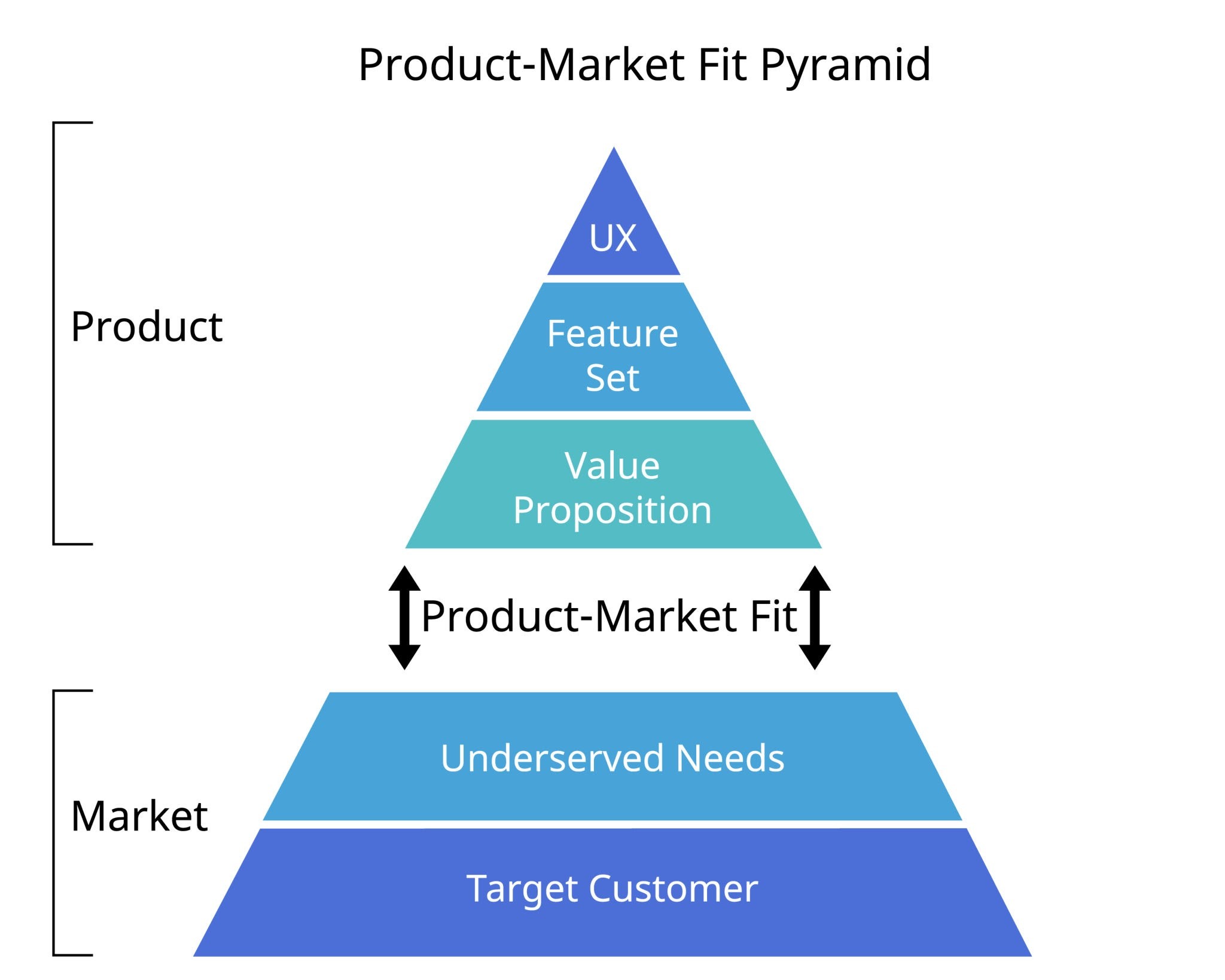
The Pricing Check If they love the product but hate the price, you have a business model problem, not a product problem. Use the Van Westendorp Meter to find the psychological price floor and ceiling.


Stop Guessing. Start Building.
Turn your assumptions into answers. Our platform provides the clear, actionable insights you need to build products that people truly want, without the enterprise-level budget or complexity.
Get answers in as little as 48 hours
Access high-quality, targeted audiences
Confident, data-driven decisions.


